Copper Cable Lug Production Line
Jump to section
Meta Description: Explore the complete copper cable lug production line from copper tube cutting and chamfering to flattening, punching and marking. A configurable manufacturing solution for electrical connection, power distribution and energy applications.
Copper cable lugs are commonly used to connect electrical cables to terminals, busbars, electrical equipment and power distribution systems. Although the finished component appears simple, manufacturing a cable lug from copper tube involves several separate processing stages.
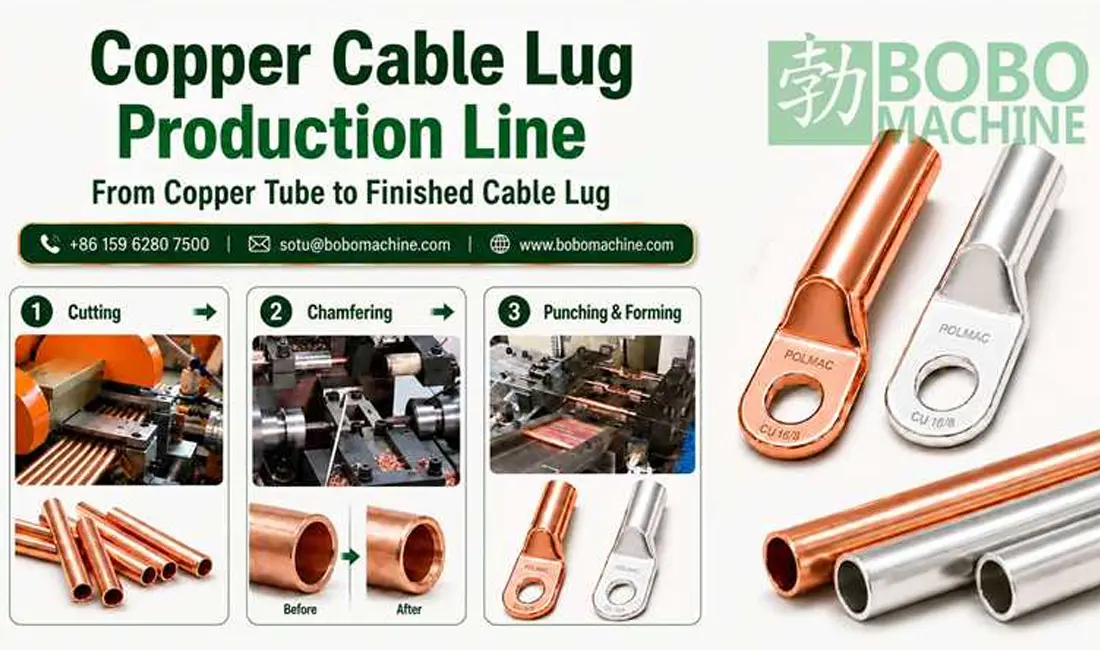
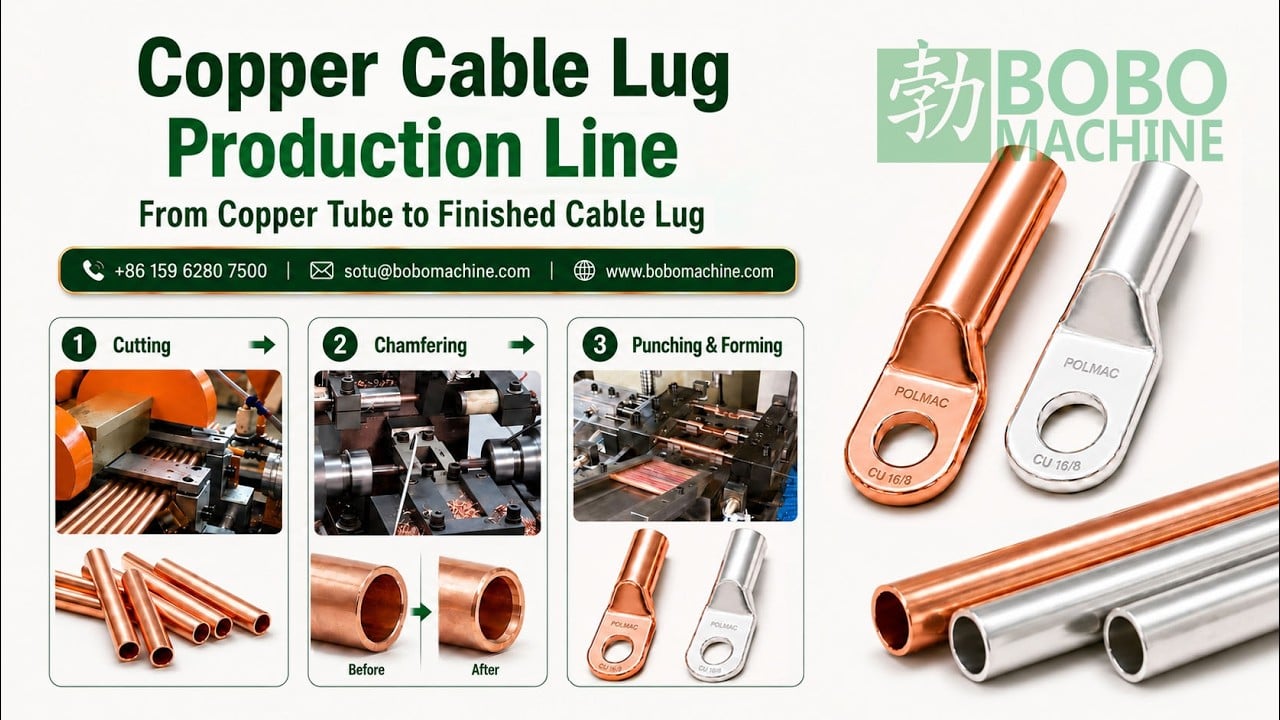
This copper cable lug production line project covers the route from raw copper tube to finished cable lug. The main operations include fixed-length cutting, tube end chamfering, flattening, mounting-hole punching and product marking.
The line can be configured for different copper tube dimensions, finished lug sizes, mounting-hole requirements and marking specifications.
PROCESS AT A GLANCE
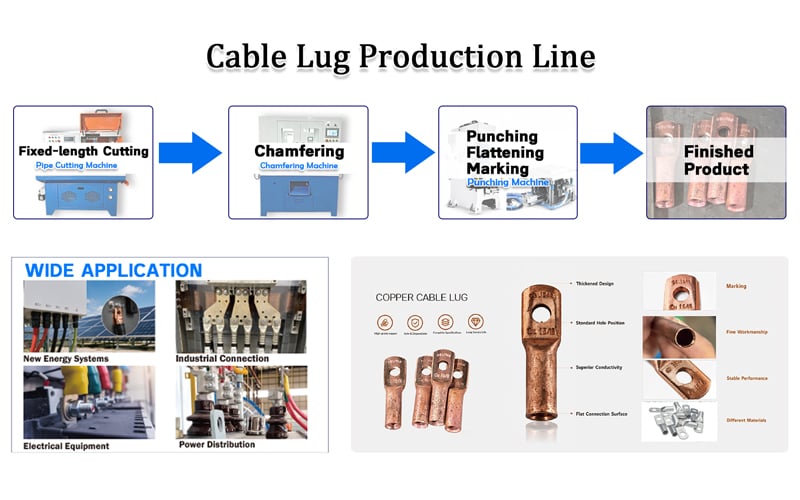
Copper Tube → Fixed-Length Cutting → Chamfering → Flattening → Punching → Marking → Finished Cable Lug
Copper Cable Lug Production Line Project Overview
This project is designed for manufacturers that produce copper cable lugs from tubular copper material and need a complete processing route rather than one isolated machine.
Step 1: Copper Tube Fixed-Length Cutting
The first operation is to cut long copper tube into shorter blanks. The tube is fed into the cutting machine and separated according to the required cable lug length.
Blank length is important because it determines the amount of material available for the later forming process and influences the final product dimensions. After cutting, the long tube becomes individual pieces ready for further processing.
Step 2: Copper Tube End Chamfering
After cutting, the tube blanks move to the chamfering stage. The cut tube end may have a sharp or unfinished edge. Chamfering improves the condition of the tube opening and prepares the blank for the following forming operations.
According to the cable lug design and copper tube dimensions, the tube end process can be configured for different tube specifications.
Step 3: Flattening, Punching and Marking
This is the main shaping stage. One end of the copper tube blank is flattened to form the palm of the cable lug. This flat area becomes the electrical connection surface of the finished component.
A mounting hole is then punched through the flattened section so that the lug can be bolted to a terminal, busbar or other electrical component. Marking may also be incorporated according to the product requirement. Typical content can include the cable lug size, specification or product code.
The exact setup depends on the lug design. Important dimensions include the flattened length, mounting-hole diameter, overall lug length and original copper tube dimensions.
Step 4: Finished Copper Cable Lug
Once cutting, chamfering, flattening, punching and marking are complete, the copper tube has been converted into a finished cable lug.
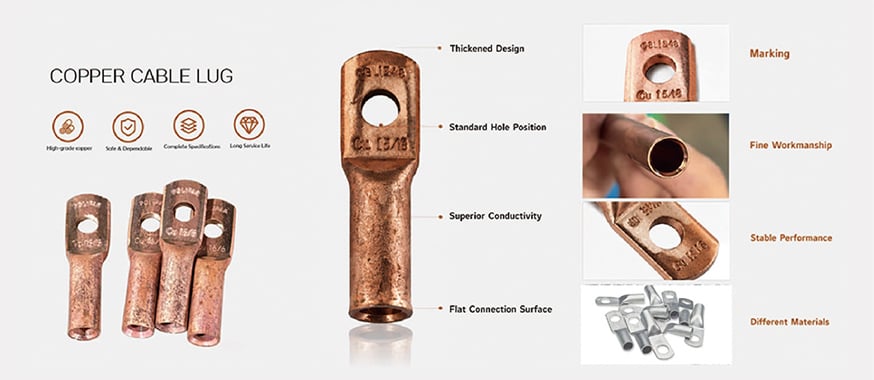
A typical lug contains a tubular cable-entry section and a flat connection palm. The cable is inserted into the tubular section, while the palm and mounting hole provide the bolted connection point.
What Does This Cable Lug Production Project Solve?
Multiple Processing Stages
Cable lug manufacturing requires several linked operations. A complete project helps the manufacturer plan the cutting, tube end preparation and forming stages as one production route.
Controlled Blank and Finished Lengths
The cutting stage must prepare tube blanks that match the material requirement of the final lug. Blank length, overall finished length and flattened-section position should therefore be evaluated together.
Tube End Preparation
The cut opening is processed before forming to improve its edge condition and prepare the tube blank for subsequent operations. The required chamfering method depends on the product design and tube specification.
Different Cable Lug Specifications
Different applications may require different tube diameters, lug lengths, palm dimensions, hole diameters and marking contents. The equipment configuration should be based on the customer’s actual product drawing or sample.
What Is a Copper Cable Lug?
A copper cable lug is an electrical connection component used between an electrical cable and electrical equipment. The cable is inserted into the tubular section of the lug, while the flattened palm is attached to a busbar, terminal or other component through the mounting hole.
Copper is widely used for electrical connection components because of its conductivity and forming characteristics. Tubular copper material can be cut, chamfered, flattened, punched and marked to manufacture cable terminals in different dimensions.
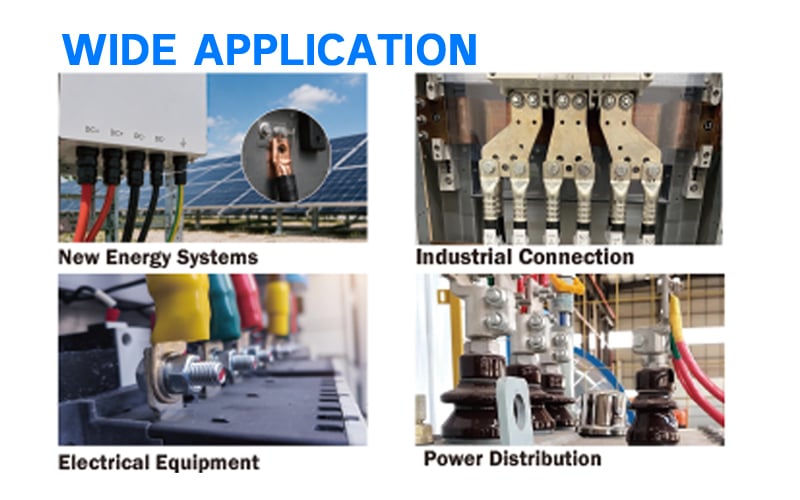
Applications of Copper Cable Lugs
Power Distribution Systems
Distribution cabinets, electrical panels, switchgear, busbar systems and other power distribution equipment.
New Energy Systems
Solar power systems, energy storage equipment, battery connections and power conversion equipment.
Industrial Electrical Equipment
Industrial control cabinets, motors, electrical machinery and factory power systems.
Cable and Busbar Connections
Cable-to-terminal, cable-to-busbar and equipment power connections.
Machines Used in the Copper Cable Lug Production Line
Copper Tube Cutting Machine
Cuts long copper tube into blanks of the specified length and prepares material for the next operation.
Copper Tube Chamfering Machine
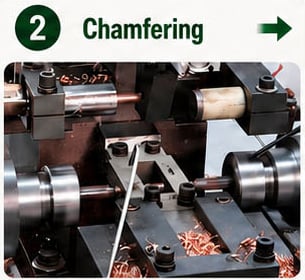
Processes the cut tube opening before cable lug forming.
Cable Lug Punching and Forming Machine
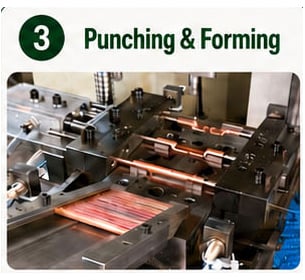
Performs the main shaping operations, which can include flattening, mounting-hole punching and marking according to the product design.
Cable Lug Production Line Customization
Cable lugs are produced in many dimensions, so the manufacturing process should be configured around the actual product rather than one fixed setup for every application. The following information is normally required when evaluating a project:
- Copper tube outer diameter and wall thickness
- Raw tube length and required cutting length
- Finished cable lug length
- Flattened palm dimensions
- Mounting-hole diameter and position
- Marking content and position
- Required finished product specification
Customers can provide product drawings, finished cable lug samples or detailed dimensions. Based on this information, the corresponding cutting, chamfering, punching and forming processes can be evaluated.
Looking for a Copper Cable Lug Production Solution?
Project Inquiry If you are planning to manufacture copper cable lugs, send BOBO Machine your finished product drawing, sample or required dimensions. We can evaluate the cutting, chamfering, flattening, punching and marking processes and recommend a suitable production configuration.
Tel: +86 159 6280 7500
Email: sotu@bobomachine.com
Website: www.bobomachine.com
Want to Know More About Our Products?
View All Products Now