Fin Collar Formation: Why Collar Height & Pitch Decide Coil Performance
Jump to section
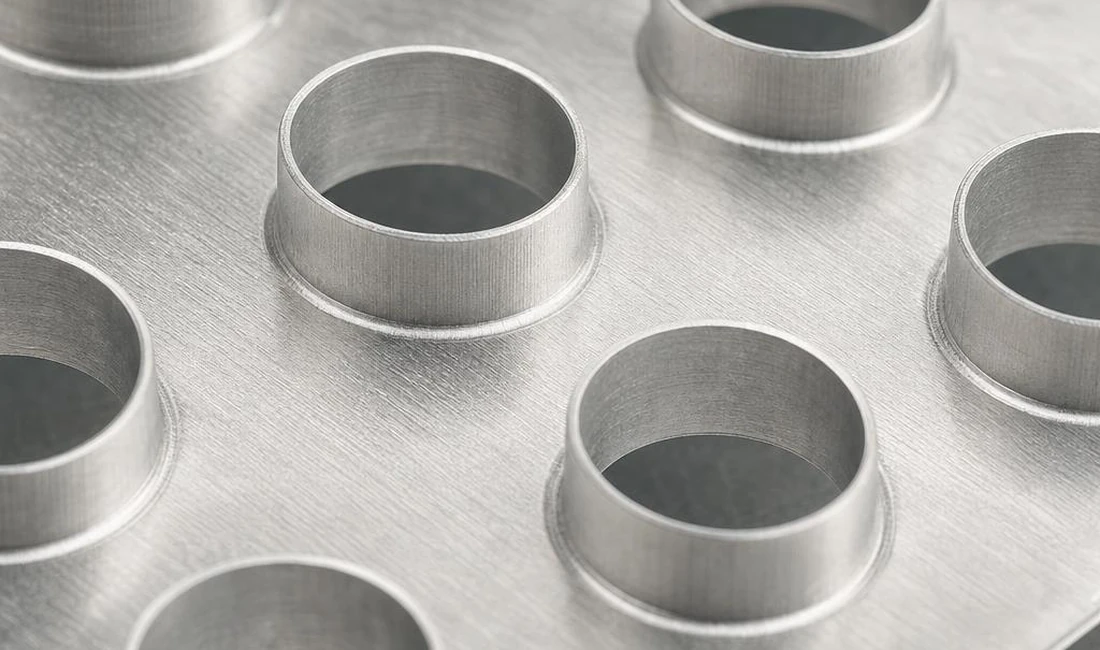
A fin collar is the small raised lip formed around each tube hole in a fin. It is easy to overlook, yet it shapes how a coil performs. The collar sets the fin spacing, holds the tubes, and carries heat from tube to fin. Two of its traits matter most, such as collar height and fin pitch. Get them right, and the coil moves heat evenly and lasts. Get them wrong, and airflow, heat transfer, and strength all suffer.
This guide explains the fin collar in plain terms for readers, such as coil makers, fin-tooling engineers, and procurement teams. The goal is to show why the collar decides coil performance, and how to form it well.
What Is a Fin Collar?
A fin collar is a short, upright lip formed around each tube hole in a fin. It is also called a flange or a flare. When a fin press punches the tube hole, it draws the metal up into this collar. The collar stands at a right angle to the flat fin. Its base often ends in a small outward foot. This simple feature does far more than it looks, as the next sections show. Without a collar, a fin would sit flat, with no set spacing and weak tube contact.
What the Fin Collar Does in a Coil
The fin collar plays three key roles in a coil. It sets the spacing between fins, it forms the tube-to-fin contact, and it adds strength. Each role affects how the coil works. The parts below explain them one by one.
Sets and Supports Fin Spacing (Pitch)
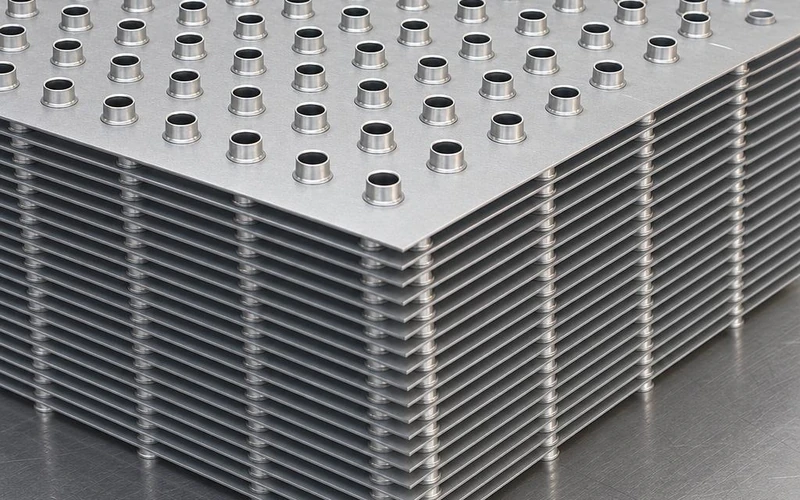
The collar sets the gap between one fin and the next. When fins stack on the tubes, the collar of one fin rests on the flat face of the next. So the collar acts as a built-in spacer. Its height sets the fin pitch, which is the distance between fins. This means every collar must be the same height for even spacing. A steady collar height gives a neat, evenly spaced fin pack.
Creates Tube-to-Fin Contact for Heat Transfer
The collar forms the surface that carries heat from the tube to the fin. Before assembly, the collar inner wall sits just larger than the tube. After the tubes go in, an expansion step presses the tube wall out against the collar. This makes tight metal-to-metal contact, which lets heat flow from tube to fin. The taller the collar, the more contact area it gives. Good contact here is the main path for heat, so it shapes the whole coil’s output.
Adds Rigidity to the Fin Pack
The collar also makes each fin stiffer and easier to handle. A flat sheet of thin metal bends easily, but the raised collars brace it. This added stiffness helps the fins keep their shape during stacking and assembly. It also helps the fins grip the tubes and stay square. Even collars matter for automated assembly too, since machines stack fins and insert tubes at speed. A bad collar can jam this flow. A rigid fin pack is easier to build and holds its spacing better over time.
Why Collar Height and Fin Pitch Decide Coil Performance
Collar height and fin pitch are tied together, and together they decide performance. The collar height sets the pitch, and the pitch shapes airflow and heat transfer. The collar shape also sets the tube contact. A small change here ripples through the whole coil. The parts below explain each link.
How Collar Height Sets Fin Pitch
Collar height and fin pitch are really the same measure. Since the collar spaces the fins, its height equals the gap between them. A taller collar spreads the fins farther apart, which lowers the fin count. A shorter collar packs the fins closer, which raises the fin count. If collar height varies across a batch, the fin spacing turns uneven. Uneven spacing then sends air through some gaps faster than others, which causes hot spots and lost performance.
How Pitch Affects Heat Transfer and Pressure Drop
Fin pitch controls how much fin area sits in the coil, and how the air flows. A tight pitch packs in more fin area, which raises heat transfer. But a tight pitch also raises pressure drop and clogs faster with dust or frost. A wide pitch does the reverse, with less heat transfer but lower resistance. Because collar height sets this pitch, it directly steers this trade-off. The link between fin type, pitch, and airflow is covered in the guide on fin geometry.
How the Collar Affects Thermal Contact
The collar decides how well heat crosses from tube to fin. Its inner wall must match the tube size, with a small gap for insertion. Its height sets the contact area, and its foot adds a little more. A collar that stands straight and true gives even contact all around. The expansion step then locks this contact in place, so the collar and expansion work as a pair. A poor collar leaves gaps that block heat, no matter how well the rest is built.
How Fin Collars Are Formed (Step by Step)
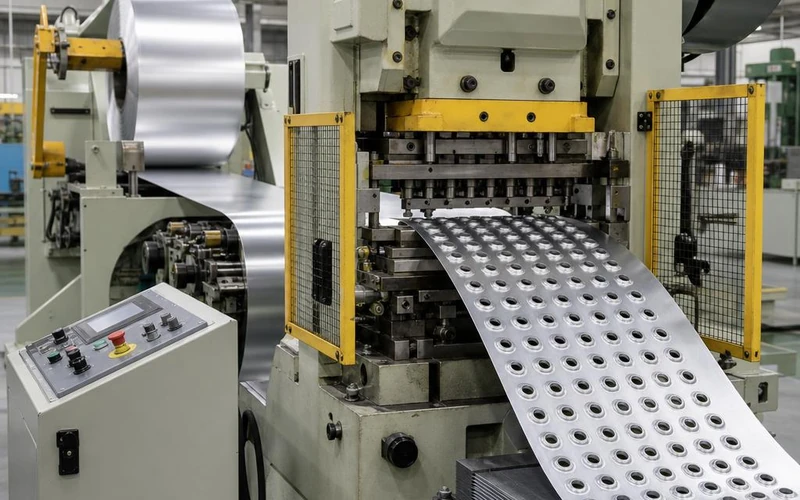
Collars are formed inside a progressive die as the strip moves through it. The die cannot pull a full collar in one hit, or the metal would tear. Instead, it shapes the collar in a series of steps. The process runs in three main stages, such as piercing, drawing, and forming the foot. The parts below walk through each stage.
Piercing the Pilot Hole
The first stage punches a small pilot hole in the fin. This hole is smaller than the finished tube hole. It gives the metal a starting point to draw from. A clean, centered pilot hole is vital, since every later step builds on it. A ragged hole here leads to a torn or uneven collar.
Drawing the Collar in Stages
The next stages draw the collar up little by little. Each station pulls the metal a bit higher and thinner. Splitting the work over several stations keeps the metal from cracking. The die corners must be smooth so the metal flows without tearing. This gradual draw is what sets the final collar height. More stations allow a taller, cleaner collar.
Forming the Collar Foot
The last stage forms the foot at the base of the collar. The foot is a small outward flare where the collar meets the flat fin. It helps the next fin sit flat and stack evenly. It also adds a little more contact area for heat. A final punch then cuts the finished fin from the strip. The result is a fin with clean, even collars ready to stack.
How Fin Material Affects Collar Forming
The fin metal shapes how easily a collar draws. Common fin materials, such as aluminum, copper, and coated aluminum, each behave in their own way. Aluminum is soft and stretches well, so it draws clean collars with ease. It is the most common fin metal for this reason. Copper is also formable but costs more, so it appears in fewer coils. Thicker or harder stock needs more draw stages to reach full collar height without a tear. Coated or pre-painted stock needs extra care, since a hard draw can crack the coating. A plant should set the draw stages and tooling to suit the exact material. Matching the process to the metal prevents most tears and thinning.
Key Collar Parameters to Control
A few collar parameters decide the quality of the fin. A plant should control values, such as collar height, collar bore, wall thickness, and squareness. Each one affects fit or performance.
Collar height equals the target fin pitch, so it must stay even across every fin. Even a small drift changes the spacing and the fin count.
Collar bore, the inner diameter, must match the tube with a small gap for insertion. Too tight a bore blocks assembly, while too loose a bore weakens contact.
Wall thickness should stay even as the collar draws up. The metal thins as it stretches, and too much thinning weakens the collar.
Squareness means the collar stands at a true right angle. A leaning collar gives uneven contact and poor stacking.
The collar foot should be full and even, since it sets how flat the next fin sits.
Common Fin Collar Defects and How to Prevent Them
Most collar faults come from a few clear causes, such as worn tooling, an over-aggressive draw, and uneven material. The table below lists the common defects, their causes, and how to stop them.
| Defect | Common cause | How to prevent it |
| Cracked or torn collar | Too much draw per stage; hard material | Add draw stages; anneal; smooth die corners |
| Uneven collar height | Worn tooling; strip thickness varies | Maintain tooling; control incoming material |
| Burrs at the collar edge | Worn punch or die; wrong clearance | Sharpen tooling; set the correct clearance |
| Leaning or skewed collar | Poor positioning; die misalignment | Calibrate the feed; check die alignment |
| Over-thinned collar wall | Draw ratio too high | Limit the draw ratio; form in more stages |
| Incomplete collar foot | Wrong forming station setup | Adjust the foot tooling; run a first-piece check |
A short daily check of tooling and the first fin prevents most of these faults. Logging the results also helps a team catch a slow drift before it fills a batch with bad fins.
Choosing Fin Tooling for Consistent Collars
Collar quality depends mostly on the fin die and the machine that runs it. A good progressive die forms the collar over enough stages to avoid tearing. It also holds tight, even height across every hole. The die sets the collar height, so a change in fin pitch means a change or reset of the tooling. A plant that runs several pitches needs tooling built for that range. Buyers can review options for this step on the fin processing machine page to match the tooling to their collar and pitch needs.
Frequently Asked Questions
What is a fin collar and why does it matter?
A fin collar is the raised lip formed around each tube hole in a fin. It sets the fin spacing, forms the tube contact, and stiffens the fin. These roles make it central to how a coil performs. A poor collar hurts spacing, heat transfer, and strength at once.
How does collar height affect fin pitch?
Collar height sets the fin pitch directly. The collar of one fin rests on the next, so its height is the gap between them. A taller collar spreads the fins out, while a shorter collar packs them close. Even collar height is needed for even, consistent spacing.
What causes fin collars to crack or tear?
Cracks come from drawing the collar too fast or too far in one step. Hard or thin material and sharp die corners add to the risk. Forming the collar over more stages, with smooth tooling, prevents most tears. Annealing a hard metal can also help.
Does collar quality affect heat transfer?
Yes, a great deal. The collar carries heat from the tube to the fin. A tall, square, even collar gives good contact after expansion. A leaning or short collar leaves gaps that block heat and cut coil output.
Conclusion: Getting Coil Performance Right at the Collar
The fin collar is small, but it decides how a coil performs. Its height sets the fin pitch, which drives heat transfer and pressure drop. Its shape sets the tube contact, which the expansion step then locks in. Even, square, well-formed collars give steady spacing and strong heat flow. Uneven collars cause hot spots, weak contact, and lost output. A plant that controls collar height, bore, and squareness builds coils that perform as designed.
Buyers who already know their target fin pitch and tube size can request a sample fin to confirm the collar before committing to a full die. The fin processing machine page shows the forming options, and the contact page is the place to send a drawing and start that sample.
Want to Know More About Our Products?
View All Products Now