Industry 4.0 in Heat Exchanger Manufacturing: MES, Vision Inspection & Predictive Maintenance
Jump to section
Industry 4.0 brings smart, connected tools to heat exchanger manufacturing. It links machines, data, and software so a plant can run faster and with fewer errors. Three technologies lead this shift, such as manufacturing execution systems, vision inspection, and predictive maintenance. Each one adds speed, quality, or uptime to a coil line.
This guide explains how each tool works and what it delivers. It is written for buyers, such as plant owners, production managers, and procurement teams. The goal is to show how a smart plant builds better coils at a lower cost.
What Is Industry 4.0 in Heat Exchanger Manufacturing?
Industry 4.0 means using connected machines, data, and software to run a smarter plant. It is often called smart manufacturing. In a heat exchanger plant, it links each step, such as fin pressing, tube bending, and leak testing, into one data stream. Sensors track how each machine runs. Software reads that data and helps the plant act on it. The result is a line that sees its own state and reacts fast. This connected setup is the base for the three tools in this guide.
Why Heat Exchanger Makers Are Going Smart
Heat exchanger makers adopt Industry 4.0 to solve real pressures. Labor costs rise each year, so plants seek ways to do more with fewer hands. Buyers also demand tighter tolerances and full traceability. A smart plant meets these needs, such as steady quality, batch tracking, and fast output, at the same time. It also cuts waste and downtime, which lowers the cost per coil. Plants that go smart can win larger, stricter contracts. Those that do not may fall behind on both cost and quality.
MES (Manufacturing Execution System)
A manufacturing execution system, or MES, is the brain of a smart coil line. It tracks and guides work across the whole plant. The two parts below explain how it works and what it delivers.
How an MES Works on a Coil Line
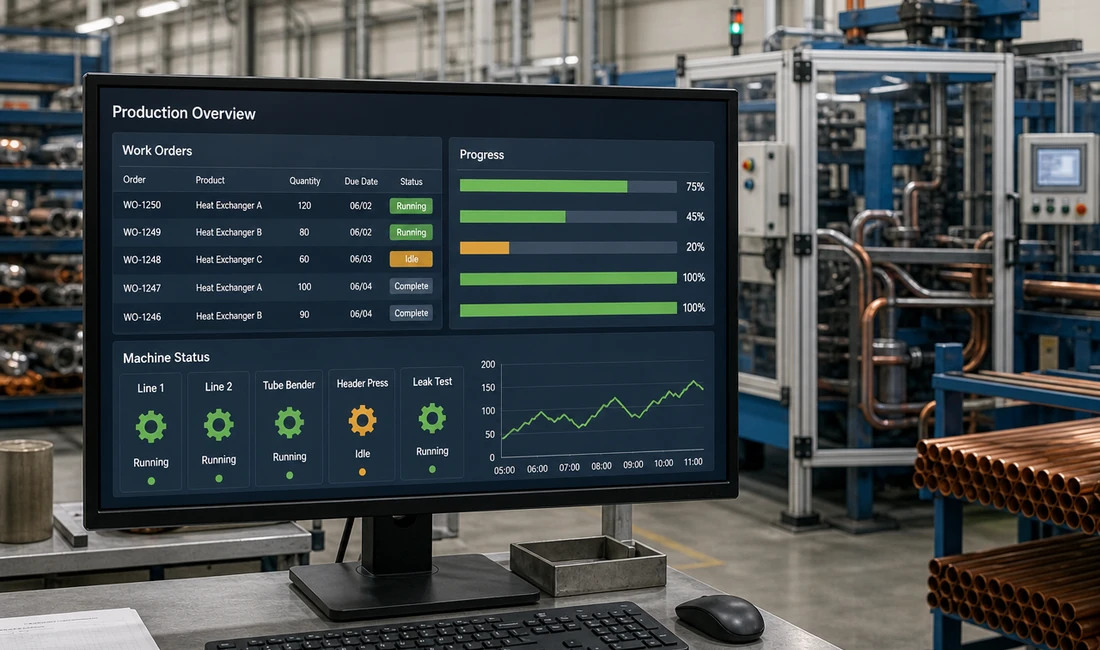
An MES connects every machine and station to one software system. It collects data, such as output count, cycle time, and machine status, in real time. The system then shows this data on a live dashboard. It can schedule jobs, route parts, and flag a slow station. It also records each batch, so the plant knows which line and shift made each coil. This live view keeps the whole plant in step.
What an MES Delivers
An MES delivers control, tracking, and proof. It shows overall equipment effectiveness, or OEE, which measures how well the line runs. It gives full traceability, so a buyer can trace a coil back to its batch and material. This helps a plant pass audits and handle any recall fast. An MES also spots waste, such as idle time, slow changeovers, and rework, so managers can fix it. In short, it turns raw plant data into clear action.
Vision Inspection
Vision inspection uses cameras and software to check parts by sight. It works faster and more steadily than the human eye. The two parts below explain how it works and what it delivers.
How Vision Inspection Works
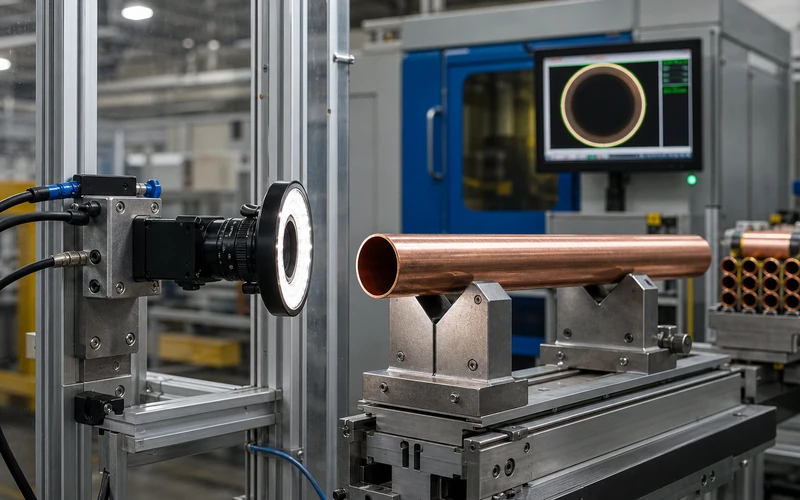
Vision inspection uses cameras, lights, and smart software to scan each part. A camera takes a sharp image of the coil or fin. The software then compares that image with a known-good standard. If the part differs, such as a bent fin, a gap, or a wrong pitch, the system flags it. The check takes a fraction of a second. It runs inline, so it does not slow the flow.
What Vision Inspection Delivers
Vision inspection delivers speed, coverage, and steady judgment. It can check every single part, not just a sample, at line speed. A manual sampling check may test only 1 coil in 20, while vision checks all of them. It catches small faults, such as fin damage, tube dents, and label errors, that a tired eye may miss. It never gets tired or distracted, so its judgment stays the same all shift. This lowers the scrap rate and keeps bad coils from reaching the buyer. Vision data also feeds the MES for tracking and trends.
Predictive Maintenance
Predictive maintenance fixes a machine before it breaks, not after. It uses data to spot wear early. The two parts below explain how it works and what it delivers.
How Predictive Maintenance Works
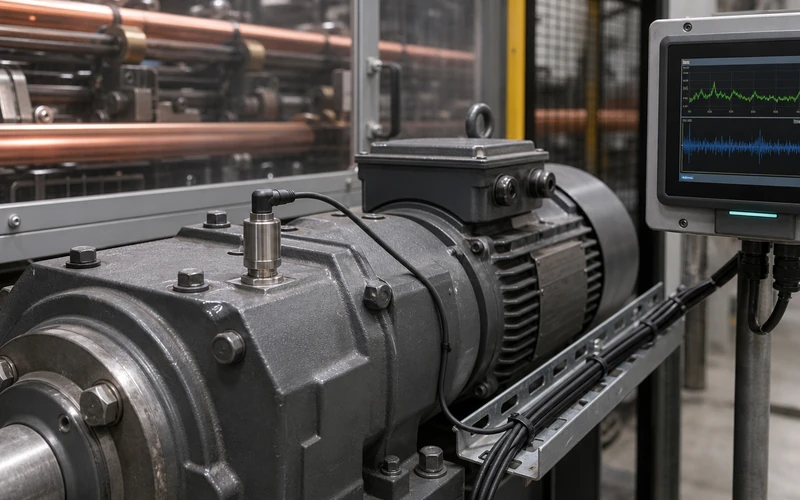
Predictive maintenance uses sensors to watch a machine’s health. Sensors track signs, such as vibration, temperature, and motor current, during each run. Software studies this data and learns the normal pattern. When a reading drifts from normal, the system warns the team. For example, rising vibration in a bearing can point to early wear. The plant can then plan a fix before the part fails.
What Predictive Maintenance Delivers
Predictive maintenance delivers uptime and lower cost. It cuts surprise breakdowns, which are the most costly kind of stop. Many plants report that it lowers unplanned downtime by 30 to 50 percent. It also lets the team plan repairs for a quiet shift, not the middle of a busy run. Planned care extends the life of parts, such as dies, bearings, and belts. Less downtime means more good coils from the same line.
How the Three Work Together
The three tools are strong alone, but stronger together. They share one data stream, so each one feeds the others. Vision inspection sends defect data to the MES, which tracks the trend. The MES may then link a rise in defects to a worn tool. Predictive maintenance flags that tool before it fails, which prevents more bad parts. This loop turns separate tools into one smart system. The plant then runs on facts, not guesses.
Other Smart Technologies to Know
MES, vision, and predictive maintenance lead the shift, but a few more tools support them. These include several technologies, such as IIoT sensors, digital twins, and robotics. IIoT sensors, short for Industrial Internet of Things, collect data from every machine and send it to the network. A digital twin is a live software copy of the line that lets a plant test changes without risk. Robots and cobots handle tasks, such as loading, stacking, and moving coils, which frees workers for skilled jobs. Edge and cloud computing store and process the data these tools create. Together, they deepen the smart setup built on the three core tools.
Comparing Traditional vs Industry 4.0 Production
The table below sets a traditional line against an Industry 4.0 line. It shows how the smart tools change daily work.
| Factor | Traditional Production | Industry 4.0 Production |
| Data | Manual logs, on paper | Real-time, automatic |
| Quality check | Sample by hand | 100% by vision |
| Maintenance | Fix after breakdown | Predict and plan |
| Traceability | Hard and slow | Full, by batch |
| Downtime | Higher, sudden | Lower, planned |
| Labor per coil | Higher | Lower |
| Best fit | Small, simple runs | High volume, tight specs |
This table is a general guide. A plant can adopt these tools step by step, not all at once.
Weighing the Cost of Going Smart
Going smart has a cost, so a buyer should weigh it like any investment. The upfront cost covers items, such as sensors, software licenses, and staff training. Integration work and a data network add to the total. But the returns often outweigh these costs over time. A smart plant saves through less scrap, less downtime, and lower labor per coil. It also gains traceability, which helps win stricter contracts. Many plants recover the cost within a few years, much like an automated line. A phased start keeps the early cost low while the gains build.
How to Start the Move to Industry 4.0
A plant does not need to go fully smart on day one. The best path is often gradual and planned. The three parts below give a clear way to start.
Start Small and Scale
A plant can start with one tool and grow from there. Many begin with vision inspection, since it shows fast, clear gains. Others start with an MES to get a live view of the plant. Once one tool proves its worth, the plant adds the next. This phased path spreads the cost and lowers risk.
Check Data and Integration Readiness
Smart tools need machines that can share data. A buyer should check whether each machine has sensors and a data port. Older machines may need a retrofit to connect. The plant also needs a network and a place to store the data. A quick readiness check avoids surprises during setup.
Choose the Right Machinery Partner
The machinery partner shapes how smooth the move is. A good supplier builds data links and smart features into the line from the start. Buyers should ask whether a line supports tools, such as MES, vision inspection, and predictive maintenance. A modern integrated tube processing line can arrive ready for these tools. This saves the cost and effort of a later retrofit.
Frequently Asked Questions
Is Industry 4.0 only for large heat exchanger plants?
No. Smart tools help plants of any size. A small plant can start with one tool, such as vision inspection, and grow later. The gains in quality and uptime matter at every scale. A phased start keeps the cost manageable for a smaller firm.
Does an MES replace human operators?
No. An MES guides and tracks work, but people still run the plant. It gives operators and managers a clear, live view. This helps them act faster and make better calls. The system supports staff rather than replacing them.
How much can predictive maintenance cut downtime?
Results vary, but the gains can be large. Many plants report a 30 to 50 percent drop in unplanned downtime. It also lowers repair cost by catching wear early. The exact result depends on the machines and the data quality.
Can old machines be upgraded to Industry 4.0?
Often, yes. Many older machines can take a retrofit with sensors and a data link. This lets them join an MES or a predictive maintenance system. A full replacement is not always needed. A buyer should ask a supplier which upgrades fit each machine.
Conclusion: Building a Smart Heat Exchanger Plant
Industry 4.0 helps a heat exchanger plant build better coils at a lower cost. An MES gives a live view and full traceability. Vision inspection checks every part with a steady eye. Predictive maintenance keeps the line running and cuts surprise stops. Together, these tools form one smart system that runs on data. A plant can start small and scale as the gains prove out. To explore a line built for smart production, buyers can browse the integrated tube processing line range or share their goals through the contact page.
Want to Know More About Our Products?
View All Products Now