Hairpin Tube Bending: Process Walkthrough for HVAC Coil Production
Jump to section
Hairpin tube bending shapes a straight tube into a U-form that fits an HVAC coil. It is one of the first steps in coil production, and it sets the quality of every step that follows.
This guide walks through the process from raw tube to sorted hairpin. It covers the stages, the settings to control, and the defects to avoid. It is written for readers, such as coil makers, process engineers, and production managers. The goal is to help a plant bend cleaner hairpins and build better HVAC coils.
What Is a Hairpin Tube in an HVAC Coil?
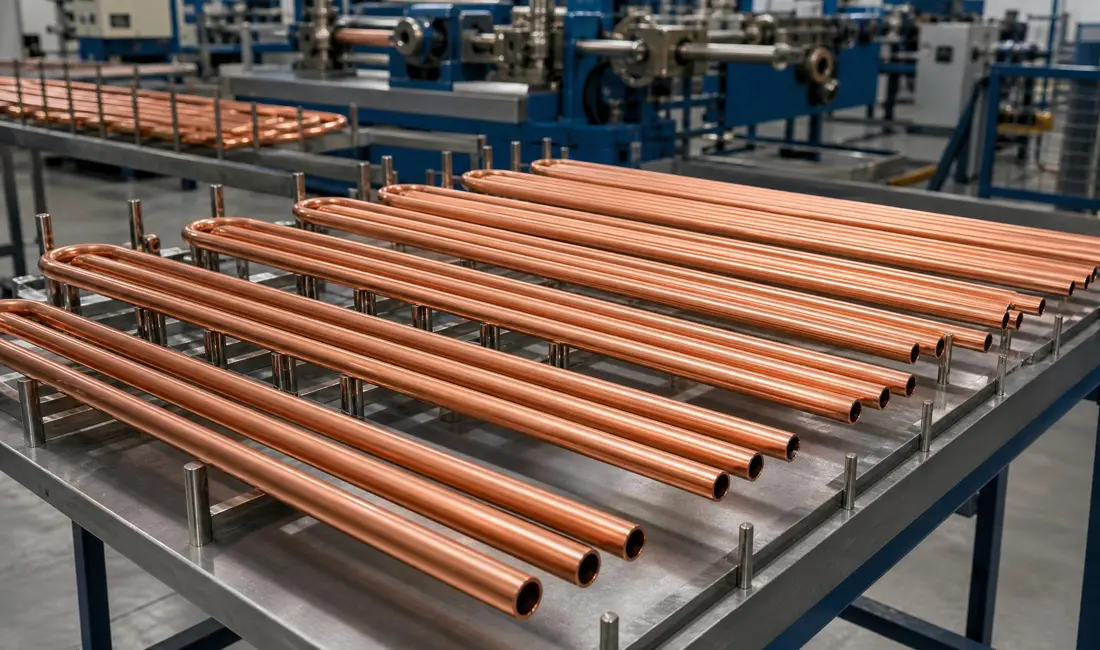
A hairpin tube is a straight tube bent into a U-shape, like a hairpin. The bend forms two parallel legs joined by a curve at one end. In an HVAC coil, workers slide these legs through the holes in a stack of fins. The open ends are then joined by return bends, which link the tubes into one flow path. Refrigerant or water runs through this path while air passes over the fins. The hairpin is therefore the backbone of the coil, since it carries the fluid and holds the fins in place.
Why Hairpin Bending Matters for HVAC Coil Quality
Bending accuracy decides whether the rest of the build goes smoothly. The two legs must sit at the exact spacing of the holes in the fin pack. If the spacing drifts by even a small amount, the legs will not enter cleanly. A forced fit can scratch the fin collars, which harms heat transfer and looks poor.
The bend itself must also keep the tube sound. A tight or rough bend can flatten the tube, which restricts flow and raises pressure drop. It can also thin the outer wall, which weakens the tube and raises the leak risk later. A wrinkled inner wall creates turbulence and traps dirt. Clean, accurate bends therefore protect flow, strength, and the fit of every part downstream.
The Hairpin Tube Bending Process Step by Step
The process runs in five main stages, such as feeding, cutting, bending, cleaning, and inspection. Each stage feeds the next, so an error early on carries through. The parts below walk through each stage in order.
Step 1 — Tube Feeding and Straightening
The process starts by feeding a tube from a coil or a rack of straight lengths. Copper and aluminum often arrive in large coils, which hold a curve from storage. A straightener pulls the tube through a set of rollers that remove this curve. The rollers also relieve stress in the metal, which helps the tube bend the same way each time. Straight, even feedstock is the base for every accurate bend that follows.
Step 2 — Cutting to Length
Next, the machine cuts each tube to a set length. This length decides the depth of the finished coil, so it must match the design. Most machines cut with a rotary blade or a shear that leaves a clean, square end. A ragged or angled cut causes trouble later, since burrs can score the fin collars during assembly. Many lines hold cut length within about ±0.5 mm to keep coils consistent.
Step 3 — Bending the Hairpin
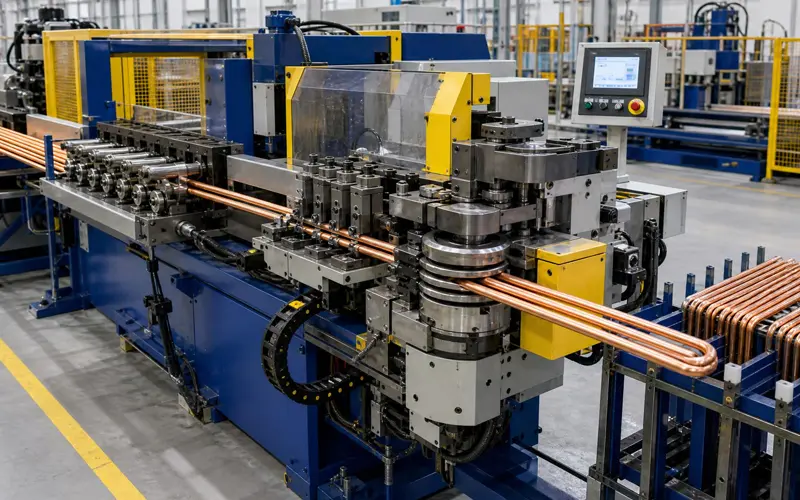
The bending stage forms the U-shape. A clamp holds the tube against a bend die, and the die rotates to draw the tube around its radius. A pressure die supports the straight leg during the pull. For thin walls or tight radii, a mandrel sits inside the tube to stop it from collapsing. The machine also adds a small overbend to offset springback, which is the tube’s tendency to relax after release. Speed matters too, since bending too fast can crack the outer wall.
Step 4 — Deburring and Cleaning
After bending, each tube needs a clean finish. Deburring removes the sharp edges left at the cut ends. This step protects the fin collars during assembly and helps the return bends seat well. Cleaning then removes items, such as metal chips, bending lubricant, and dust. Leftover oil is a real risk, because it can spoil a brazed joint later in the line. A clean, dry tube is far easier to braze and to test.
Step 5 — Inspection and Sorting
The last stage checks each hairpin before it moves on. Operators or sensors measure leg spacing, bend angle, and overall length. They also look for faults, such as wrinkles, flat spots, and scratches. Good parts move to the assembly area, while bad parts go to scrap or rework. Many plants check the first piece of each batch in detail, then sample the rest. This gate keeps bad tubes out of a finished coil, where a fix costs far more.
What Happens After Bending: From Hairpin to Finished Coil
Bending is one link in a longer chain. Once a hairpin passes inspection, workers or robots insert the legs through the fin pack. The tubes then go through expansion, which presses the tube wall tight against each fin collar. This step creates the metal contact that lets heat flow, and the choice between mechanical and hydraulic expansion shapes the result. Return bends are added next, then brazed to seal each joint. Finally, the coil goes through leak testing, such as pressure decay or helium testing, before it ships. A clean bend makes every one of these later steps easier and faster.
How Tube Materials Affect the Bend
The metal shapes how a tube behaves in the die. Common HVAC tube materials, such as copper, aluminum, and stainless steel, each bend in their own way. The settings that suit one metal can spoil another.
Copper is soft and bends with ease. It holds its round shape well and springs back only a little. Most HVAC hairpins use copper for this reason.
Aluminum is lighter and cheaper, but it is less forgiving. It springs back more than copper, so the overbend setting must be larger. It also cracks sooner if the radius is too tight.
Stainless steel is much harder. It needs more force, stronger tooling, and a slower bend speed. Springback is high, so precise compensation matters.
Wall thickness matters as much as the metal itself. A thin wall collapses more easily, so it often needs a mandrel. Plants that switch between materials should store a separate program for each one.
Key Process Parameters to Control
A few settings decide whether a bend comes out right. Plants should control values, such as bend radius, leg spacing, springback, wall thinning, and ovality. Each one is explained below with a working range.
Bend radius is the size of the curve at the U. A radius of two to three times the tube diameter is common for HVAC hairpins. A tighter radius raises the risk of wrinkles and flattening.
Leg spacing must match the fin hole pattern. Many plants hold this within about ±0.3 mm, since the legs have to enter many fins at once.
Springback is how far the tube relaxes after the die releases. A CNC control stores a set overbend for each tube and material, so the finished angle lands on target.
Wall thinning happens on the outside of the bend, where the metal stretches. Plants often limit thinning to about 10 to 15 percent of the original wall.
Ovality measures how far the round tube has flattened. A common limit is 5 to 8 percent, since a flatter tube restricts flow and raises pressure drop.
Common Hairpin Bending Defects and How to Prevent Them
Most bending faults trace back to a few causes, such as tooling wear, wrong settings, and poor lubrication. The table below lists the common defects, what causes them, and how to stop them.
| Defect | Common cause | How to prevent it |
| Wrinkles on the inner bend | Radius too tight; no internal support | Increase the radius; use a mandrel or wiper die |
| Flattening or high ovality | Weak clamping; worn dies | Adjust clamp pressure; replace dies on schedule |
| Cracks on the outer bend | Hard material; bending too fast | Anneal the tube; slow the bend speed |
| Angle out of tolerance | No springback compensation | Set CNC overbend; check incoming material |
| Surface scratches | Dirty dies; too little lubricant | Clean tooling; apply the right lubricant |
| Uneven leg spacing | Cut length drift; poor positioning | Calibrate the cutter; run a first-piece check |
A short daily check of tooling and settings prevents most of these faults. Logging each result also helps a team spot a slow drift before it becomes scrap.
Choosing a Hairpin Bending Machine for HVAC Production
The right machine depends on the coils a plant builds. Buyers should weigh factors, such as tube size range, output speed, control type, and line integration. Tube range matters first, since the machine must handle the diameters and wall thicknesses in use. Output speed comes next: a multi-head machine bends several tubes per cycle, which suits high volume.
Control type shapes daily work. A CNC machine stores a program for each part, so an operator can recall a job in seconds and cut changeover time. Integration matters for plants that run a full line, since a bender that shares data with the plant system helps track output and faults. Buyers who want a machine for HVAC coil work can review the serpentine tube bending machine range, which covers both hairpin and continuous bending needs.
Frequently Asked Questions
What is the minimum bend radius for a hairpin tube?
Most HVAC hairpins use a radius of two to three times the tube diameter. A tighter radius is possible with a mandrel and good tooling. Below that range, the risk of wrinkles and flattening climbs. The safe minimum depends on the tube material and wall thickness.
Why do hairpin tubes wrinkle or flatten when bent?
Wrinkles and flat spots come from too little support during the bend. A radius that is too tight, a missing mandrel, or worn dies are common causes. Weak clamping and fast bending speeds add to the problem. Correct tooling and a larger radius solve most cases.
Do hairpin benders need a mandrel?
Not always. Thick-wall tubes with a generous radius often bend well without one. Thin walls and tight radii usually need a mandrel to hold the round shape. The choice depends on the wall thickness, the radius, and the ovality limit.
How is hairpin bending different from serpentine bending?
A hairpin is a single U-shape made from one short tube. A serpentine is one long tube bent into many turns in a row, forming a continuous path. Hairpins need return bends to link them, while a serpentine reduces the number of joints. Both shapes serve HVAC coils, and many plants run each for different products.
Conclusion: Building Better HVAC Coils from the First Bend
Every good HVAC coil starts with a clean hairpin. The five stages in this guide build on one another, from feeding and cutting through bending, cleaning, and inspection. When one stage drifts, the cost shows up later as scrap, rework, or a coil that leaks in the field.
The encouraging part is that most bending faults are preventable. A plant should set the radius to suit the material and compensate for springback. It should hold leg spacing to spec and check its tooling every day. Logging the first-piece result keeps long runs steady and catches slow drift early.
The right machine makes these habits easier to keep. Teams planning a new coil line, or upgrading an aging one, can review current options in the serpentine tube bending machine range. Engineers who want a setup matched to their own tube sizes and output targets can start that discussion on the contact page.
Want to Know More About Our Products?
View All Products Now