Mechanical vs Hydraulic Tube Expansion: Which Process Fits Your Coil?
Jump to section
Tube expansion joins tubes to fins so a coil can move heat well. Two processes do this job, such as mechanical expansion and hydraulic expansion. Mechanical expansion is fast and low in cost. Hydraulic expansion is gentle and very even. Each one fits a different coil, material, and volume.
This guide compares both in plain terms for buyers, such as coil makers, process engineers, and procurement teams. The goal is to help a plant pick the process that fits its own coils.
Mechanical Tube Expansion vs Hydraulic Tube Expansion at a Glance
The short answer depends on the coil. Mechanical expansion leads on speed and cost, so it suits high-volume, standard coils. Hydraulic expansion leads to evenness and gentle handling, so it suits thin walls and hard metals. Most HVAC and appliance plants use mechanical expansion for daily work. Plants that build tight-spec or delicate coils lean toward hydraulic. The rest of this guide explains why, factor by factor.
Why Tube Expansion Matters for Coil Performance
Expansion decides how well heat moves from the tube to the fins. Before expansion, a small air gap sits between the tube wall and the fin collar. Air blocks heat, so this gap lowers performance. Expansion pushes the tube wall out until it presses tight against the collar. This metal-to-metal contact lets heat flow with ease.
The amount of expansion must be just right. Most plants aim for a modest growth in tube diameter, often in the range of 2 to 4 percent, set by the tube and fin design. Too little expansion leaves a loose fit, so the coil moves less heat than its design promises. Too much expansion stretches the tube wall thin, which weakens it and raises the leak risk. A thin wall may pass at first, then fail in the field. This is why plants check wall condition after expansion, often with eddy current testing. Careful control at this step protects both efficiency and coil life.
How Mechanical and Hydraulic Expansion Work
The two processes reach the same goal by different means. One pushes metal from the inside with a tool. The other pushes it out with fluid pressure. This core difference drives every gap in the sections that follow.
Mechanical (Bullet) Expansion
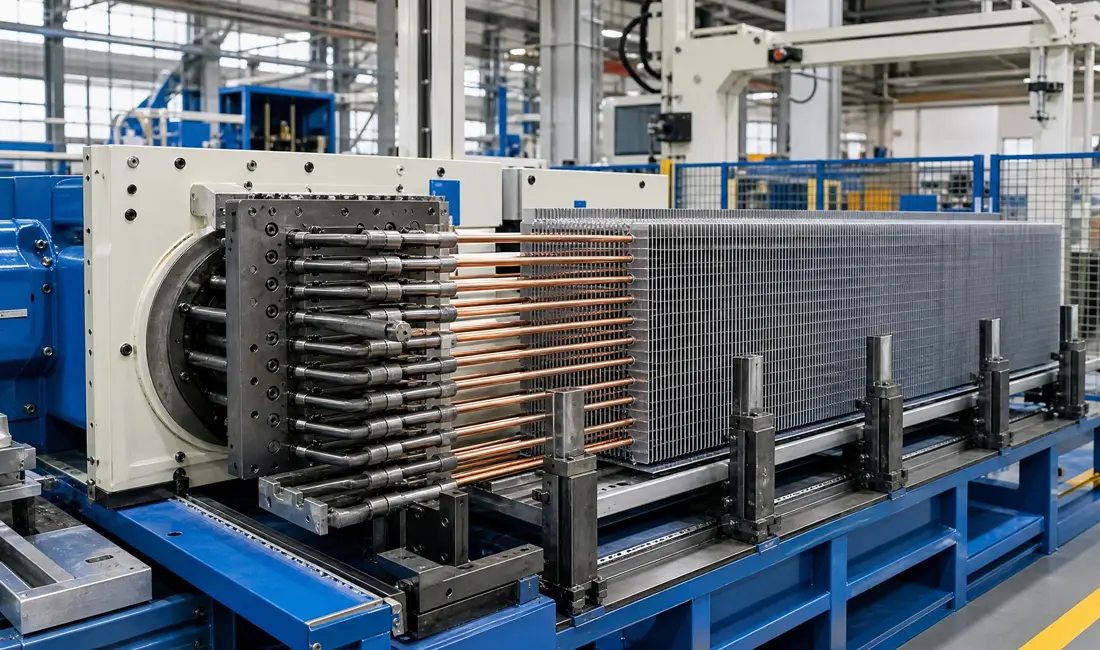
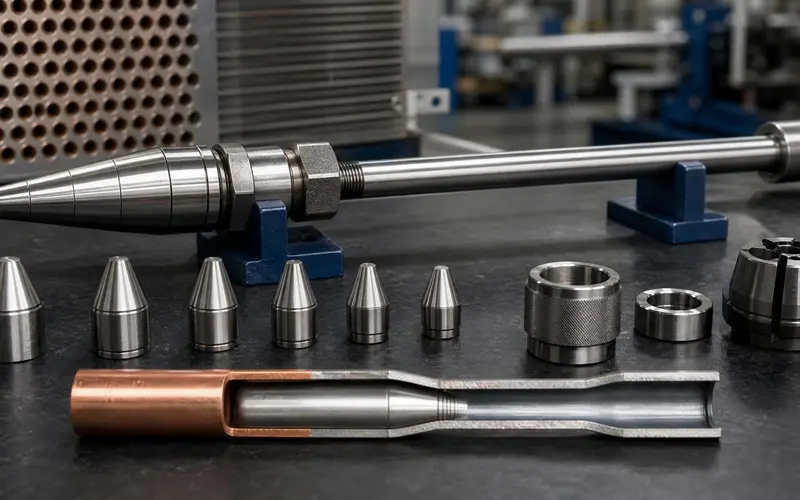
Mechanical expansion uses a steel tool to widen the tube from within. A rod drives a bullet, also called a mandrel, through the tube bore. The bullet is slightly larger than the tube, so it forces the wall outward as it travels. Lubricant coats the bullet to cut friction and protect the surface. The whole pass takes only seconds. Because the tool touches the bore, the plant must clean the tube afterward to remove oil.
Hydraulic Expansion
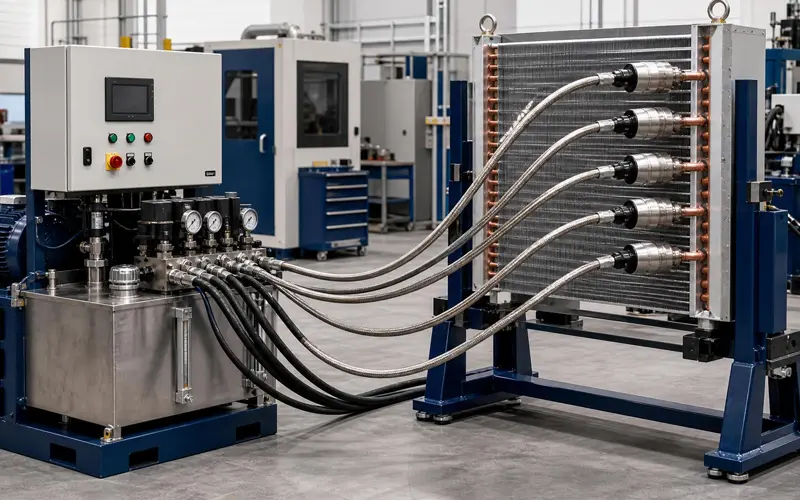
Hydraulic expansion uses fluid pressure to widen the tube. The plant seals both tube ends and fills the bore with fluid, such as water or oil. A pump then raises the pressure until the wall yields and presses against the fin collar. Nothing solid touches the inner surface during this step. The pressure acts on every point at once, so the wall grows evenly along its full length.
Key Differences Between Mechanical Tube Expansion and Hydraulic Tube Expansion
The two processes differ most in four areas, such as uniformity, material fit, speed and cost, and tooling. Each area favors one process over the other. The parts below cover them in turn.
Expansion Uniformity and Fin-to-Tube Contact
Hydraulic expansion gives a more even result. Fluid pressure acts on the whole bore at once, so every section grows by the same amount. This evenness creates steady fin contact from end to end. Mechanical expansion is slightly less even. Friction and bullet wear can shift the result along a long tube, so the last section may differ a little from the first. For most standard coils this gap is small and acceptable. For long tubes or tight specs, the hydraulic result is more consistent, which lowers the scrap rate.
Tube Material and Wall Thickness Compatibility
Hydraulic expansion handles a wider range of tubes. It suits thin walls, since no tool scrapes the bore and the pressure spreads out. It also suits hard or costly metals, such as stainless steel, titanium, and cupronickel, that resist a bullet pass. Mechanical expansion works best on standard wall thickness in softer metals, such as copper and aluminum. On very thin walls, a bullet can score the bore or stretch the wall too far. Buyers should match the process to both the metal and the wall thickness.
Speed, Cycle Time, and Cost
Mechanical expansion wins on speed and cost. A bullet pass takes only seconds, and a machine can expand many tubes at once. The equipment is simpler, so it costs less to buy and run. Hydraulic expansion takes longer, since the plant must seal the ends, fill the bore, raise the pressure, and drain the fluid. The machines also cost more because they need pumps, seals, and controls. For large runs of standard coils, mechanical speed keeps the cost per coil low.
Tooling, Maintenance, and Consumables
Each process carries its own upkeep and hidden costs. Mechanical expansion consumes items, such as bullets, rods, and lubricant. A worn bullet expands less, so the plant must track wear and replace it on schedule. The lubricant also calls for a cleaning stage afterward, which adds time and cost. Hydraulic expansion needs care of its seals, pumps, and fluid. Seals wear and must be replaced, and the fluid needs filtering and, at times, drying. Buyers should count these ongoing items, not just the machine price.
Mechanical vs Hydraulic Tube Expansion: Comparison Table
The table below sets both processes side by side. It uses the same factors covered above, so buyers can compare them fast.
| Factor | Mechanical (Bullet) Expansion | Hydraulic Expansion |
| Uniformity | Good; may vary on long tubes | Excellent; even full length |
| Inner tube surface | Tool contact; can score | No contact; surface stays clean |
| Wall thickness | Best on standard walls | Handles thin walls well |
| Materials | Mainly copper and aluminum | Copper, aluminum, steel, titanium |
| Speed / cycle time | Fast | Slower |
| Equipment cost | Lower | Higher |
| Consumables | Bullets, lubricant, cleaning stage | Seals, fluid care |
| Tube shape range | Best for standard round tubes | Suits large or shaped tubes |
| Best fit | High-volume standard coils | Thin-wall, hard metal, tight specs |
This table is a general guide. The right pick still depends on the buyer’s own coils and volume.
Choosing Between Mechanical Tube Expansion and Hydraulic Tube Expansion for Your Coil
The right process depends on the product, not on the method alone. A buyer should weigh tube material, wall thickness, volume, and spec. The three parts below turn this into a clear rule.
When Mechanical Expansion Is the Right Fit
Mechanical expansion fits most high-volume coil work. It suits standard round tubes in copper or aluminum at normal wall thickness. It also suits plants that build the same coils in large numbers, such as HVAC plants, appliance plants, and automotive plants. Its speed and low cost keep the cost per coil down. For daily production of standard finned coils, it remains the common choice. Buyers can match this step to their line with the right finned tube machinery.
When Hydraulic Expansion Is the Better Choice
Hydraulic expansion fits tighter, more delicate work. It suits thin-wall tubes that a bullet might damage. It also suits hard or costly metals, such as stainless steel and titanium, and large or shaped tubes. Coils with strict leak or performance specs benefit from its even result. In these cases, the slower cycle and higher cost buy real quality gains. The key is to weigh that gain against the volume the plant must ship.
Common Mistakes to Avoid
A few errors cause most expansion defects. These mistakes include several issues, such as under-expansion, over-expansion, poor lubrication, and worn tooling. Under-expansion leaves a loose fit that cuts heat transfer. Over-expansion thins the wall and raises the leak risk. Too little lubricant can score the bore, while a worn bullet expands less than it should. Skipping the cleaning stage after mechanical expansion can also leave oil that harms later brazing. Regular checks on tooling, pressure, and cleaning prevent most of these faults.
How to Check Expansion Quality
Good expansion needs proof, not just a good setting. A plant can confirm the result with a few checks, such as diameter measurement, pull tests, and section cuts. A simple caliper check confirms the tube grew by the target amount. A pull or push test measures how firmly the fins grip the tube, which reflects contact quality. A cut section under a microscope shows the true fit between the tube wall and the fin collar.
Leak and wall checks matter just as much. Over-expansion thins the wall, and eddy current testing can find that thinning before the coil ships. A pressure decay test then confirms the tube holds its pressure. Plants that log these results can trace a defect back to a worn tool or a wrong setting. This feedback loop keeps the process steady across long runs.
Frequently Asked Questions
Which expansion method gives better heat transfer?
Both can give strong heat transfer when done right. Hydraulic expansion is more even, so fin contact stays steady along the full tube. Mechanical expansion reaches similar results on standard coils when the tooling is fresh and set well. Control matters more than method.
Can mechanical expansion damage the tube wall?
Yes, if it is not controlled. An oversized bullet or too much force can thin the wall or score the bore. A worn tool can also expand unevenly. Correct sizing, good lubricant, and regular tool checks keep the wall sound.
Is hydraulic expansion worth the higher cost?
It depends on the coil. For thin walls, hard metals, or tight specs, the even result often justifies the cost. For high-volume standard coils, mechanical expansion usually gives better value. Buyers should weigh the quality gain against the cost per coil.
Which method suits thin-wall or stainless tubes?
Hydraulic expansion suits these tubes better. Its pressure spreads evenly and nothing touches the bore, so thin walls are less likely to tear. It also handles hard metals that resist a bullet pass. Mechanical expansion fits standard walls in softer metals.
Conclusion: Mechanical Tube Expansion or Hydraulic Tube Expansion?
The choice rests on the coil, the material, and the volume. Mechanical expansion delivers speed and low cost, which suits high-volume standard coils. Hydraulic expansion delivers even, gentle forming, which suits thin walls, hard metals, and tight specs. Both can build a strong coil when the plant controls the process well. A buyer who matches the method to the product will get better heat transfer and fewer leaks.
To find the right expansion setup for a coil line, buyers can explore the finned tube machinery range or share their tube specs through the contact page.
Want to Know More About Our Products?
View All Products Now