Single Machines vs Integrated Production Lines: When Does Integration Pay Off?
Jump to section
The choice between single machines and an integrated production line comes down to volume, labor, and long-term plans. Single machines offer low cost and high flexibility. An integrated production line offers high output, steady quality, and lower labor per coil.
This guide helps buyers, such as coil makers, plant managers, and procurement teams, decide when integration pays off. It weighs the costs, the gains, and the point where a full line earns its keep. The goal is to help a buyer match the right setup to their plant.
Single Machines vs Integrated Lines at a Glance
The short answer depends on scale. Single machines suit small batches, custom work, and tight budgets. An integrated production line suits high volume, standard products, and steady quality. As output grows, the line’s labor and speed gains start to outweigh its higher cost. The rest of this guide shows where that tipping point sits. Buyers can use it to judge their own case.
How Each Setup Works
The two setups differ in how parts move through the plant. One relies on people to carry parts between machines. The other links machines so parts flow on their own. This difference drives every gap in speed, labor, and cost. The two parts below explain each setup.
The Single-Machine Approach
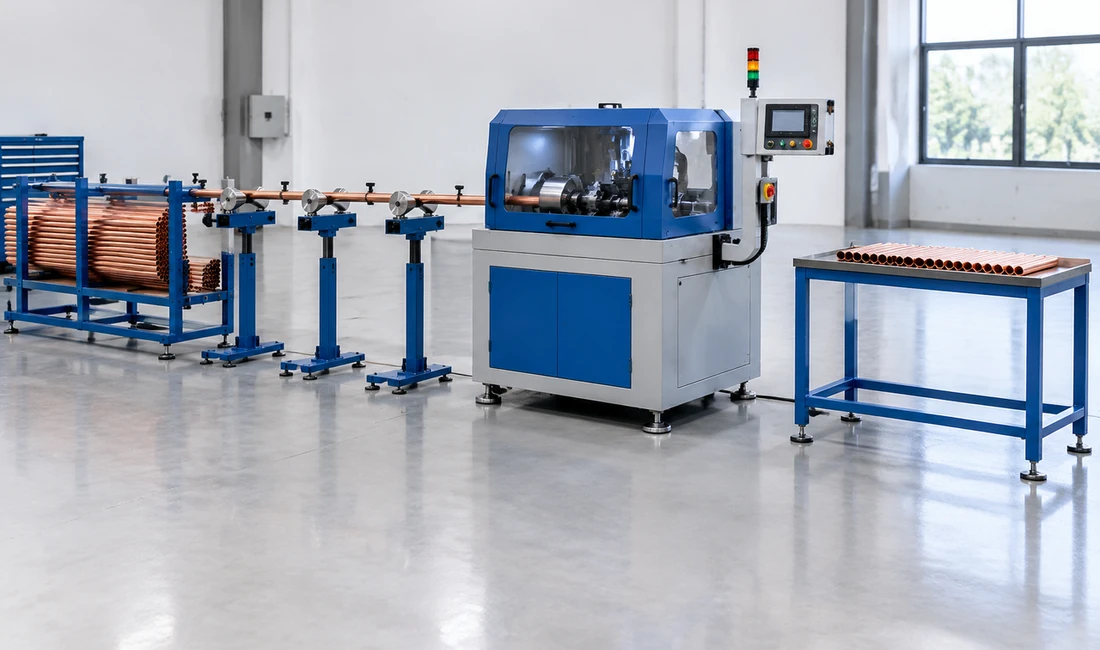
The single-machine approach uses separate, standalone machines for each step. A plant may own a fin press, a tube bender, an expander, and a welder as separate units. Workers move each batch from one machine to the next by hand or cart. This setup gives an operator full control at each stage. It also lets a plant buy one machine at a time. But the manual transfer between steps slows output and adds labor.
The Integrated Production Line Approach
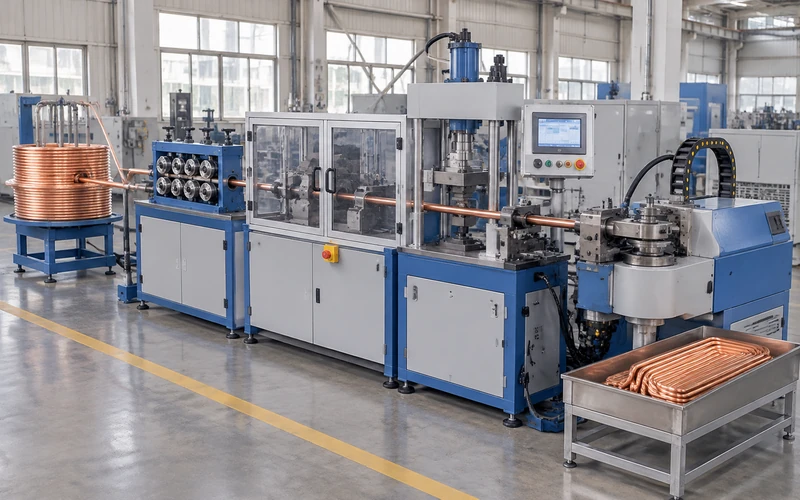
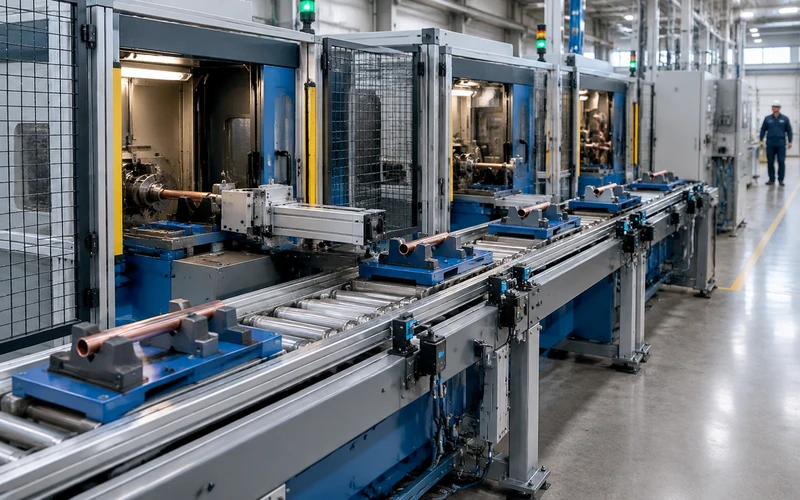
An integrated production line links every step into one connected flow. The line joins stages, such as fin pressing, tube bending, expansion, and welding, so parts move on their own. Transfer units, such as conveyors, robots, and lift arms, carry each part to the next station. A control system keeps the whole line in step. This setup runs fast and needs fewer workers. It also keeps quality steady, since machines repeat each task the same way.
Key Factors That Decide Integration
Several factors decide whether integration pays off, such as volume, labor, product mix, space, and quality needs. No single factor decides alone. A buyer should weigh all of them together. The parts below explain each one.
Production Volume and Growth Plans
Volume is the biggest factor in the choice. A high-volume plant spreads the line’s cost over many coils, which shortens payback. A low-volume plant may not use a full line enough to justify it. Growth plans matter too. A plant that expects to grow often buys a line early to avoid a second upgrade. Buyers should base the choice on future demand, not just today’s orders.
Labor Cost and Availability
Labor cost has a strong effect on the payback. An integrated line needs fewer operators, so it saves more where wages are high. It also helps where skilled workers are hard to hire. A single-machine setup leans on more hands, such as loaders, movers, and operators, at each step. When labor is scarce or costly, the line’s savings grow. In regions with low wages, the labor gain is smaller.
Product Mix and Changeover Needs
Product mix shapes which setup fits best. A plant that makes many custom coils needs quick, flexible changeovers. Single machines handle this mix with ease, since each can switch jobs on its own. An integrated line works best for standard, repeat products, such as HVAC coils, condensers, and evaporators. Modern lines can still change over, but a very high mix may slow them. Buyers should match the setup to how varied their orders are.
Floor Space and Layout
Floor space and layout also guide the choice. An integrated line packs many steps into one compact flow, which can save total space. But it needs a long, clear, connected run to work well. Single machines spread across the floor and can sit in separate rooms. This gives a plant more freedom to place them. Buyers should check that their building fits a continuous line before they buy one.
Quality and Consistency Requirements
Quality needs can tip the decision toward a line. An integrated line repeats each task the same way, which keeps coils consistent. Automated checks, such as vision inspection, pressure tests, and leak tests, catch defects in the flow. This lowers the scrap rate and protects the buyer’s brand. A single-machine setup depends more on operator skill, so results can vary. For tight-spec work, the line’s steady quality is a strong plus.
Downtime Risk and Redundancy
Downtime risk is one area where single machines hold an edge. When one standalone machine fails, the others can keep running. An integrated line is more linked, so one broken station can stop the whole flow. A buyer can lower this risk with steps, such as good maintenance, fast spare parts, and buffer stations. A buffer holds a few parts so the line keeps moving during a short stop. Buyers should ask the supplier how the line handles a fault before they buy.
The Cost Side: Investment vs Payback
Cost is where the decision becomes clear. The two setups differ in both upfront price and long-term return. A smart buyer weighs both, not just the sticker price. The two parts below break it down.
Upfront Cost of Each Approach
Single machines cost less to start. A plant can buy one machine at a time and spread the cost over months or years. This low entry cost suits small or new firms. An integrated line costs much more upfront, since it includes many linked machines and a control system. But that higher price buys speed, labor savings, and steady quality. Buyers should view the line as a long-term investment, not a one-time expense.
When Integration Pays Off
Integration pays off when yearly savings beat the extra cost. The math mirrors a simple payback test. A buyer adds up the line’s gains, such as lower labor, less scrap, and higher output, then divides the extra cost by that yearly gain. A high-volume plant with high wages may reach payback in about two to three years. A low-volume plant may take much longer. Buyers should run this test with their own real figures to get a true answer.
Side-by-Side Comparison Table
The table below sums up both setups in one view. It uses the same factors covered above, so buyers can compare them fast.
| Factor | Single Machines | Integrated Production Line |
| Upfront cost | Low — buy in stages | High — one large investment |
| Output / cycle speed | Medium — limited by manual transfer | High — automated flow |
| Labor needed | More — moving parts between steps | Less — steps linked |
| Consistency / scrap | Varies with the operator | Steady — automated control |
| Changeover flexibility | High — suits many products | Medium — suits standard batches |
| Floor space | Spread out, flexible | Compact but needs a clear run |
| Scalability | Add one machine at a time | Add modules in phases |
| Payback speed | Depends on use | Fast with high volume or high wages |
| Best fit | Tight budget, low volume, custom, startup | High volume, standard, long-term plan |
This table is a general guide. The best pick still depends on the buyer’s own volume and plans. The next section turns it into a clear rule.
When Does Integration Pay Off?
The right setup depends on the plant, not on the technology alone. A buyer should weigh volume, labor, mix, and budget together. The three parts below give a clear rule for each case.
When an Integrated Line Is Worth It
An integrated line is worth it for high-volume, standard work. It fits plants that run the same coils in large numbers. It also pays off where wages are high, since it cuts labor at every step. Makers, such as HVAC plants, automotive plants, and appliance plants, often gain the most. A firm with a long-term growth plan also benefits, since the line scales with demand. Buyers in this group can view the integrated tube processing line range to match a line to their coils.
When Single Machines Still Make Sense
Single machines still make sense for many plants. They fit firms with a tight budget or low output. They also suit shops that make many custom coils in small runs. A startup can begin with a few machines, such as a fin press, a tube bender, and an expander, and grow from there. In these cases, single machines offer a low-risk start. The key is to match the setup to the real workload.
A Middle Path: Modular / Phased Integration
Many buyers do not have to choose all at once. A modular or phased approach blends both paths. A plant can start with key single machines, then link them into a line as demand grows. This path spreads the cost over time and lowers early risk. It also lets a firm learn the process before a full commitment. For growing plants, phased integration is often the smartest route.
Frequently Asked Questions
Can I start with single machines and integrate later?
Yes. Many plants begin with single machines and add integration as they grow. A phased plan spreads the cost and lowers early risk. Buyers should tell the supplier about their growth plan, so each machine can fit a future line. This step avoids costly rework later.
What production volume justifies an integrated line?
There is no single number, but higher volume favors a line. A plant that runs the same coils across two or three shifts often gains the most. Low-volume or high-mix shops may not use a line enough to justify it. A simple payback test with real figures gives the clearest answer.
How much floor space does an integrated production line need?
An integrated line needs a long, clear, connected run rather than scattered spots. The exact space depends on the coil size and the number of steps. Many lines fit in a compact footprint, since they pack stages in sequence. Buyers should share their floor plan so the supplier can design a line that fits.
Does an integrated line really cut labor costs?
Yes. An integrated line links each step, so parts move without hand carrying. This cuts the number of operators a plant needs. The savings are largest where wages are high or workers are scarce. Over a year, lower labor cost is often the line’s biggest single gain.
Conclusion: Making the Right Call for Your Plant
The right call rests on a few clear factors, such as volume, labor cost, product mix, and growth plans. Single machines offer a low-cost, flexible start for small or custom work. An integrated production line delivers speed, labor savings, and steady quality once volume climbs. Many growing plants find that a phased path captures the best of both. A buyer who matches the setup to real demand will invest wisely. To explore full lines and plan a phased upgrade, buyers can browse the integrated tube processing line range or share their plans through the contact page for a tailored recommendation.
Want to Know More About Our Products?
View All Products Now