Brazing Copper Tubes for Heat Exchangers: Filler Selection, Flux, and Joint Design
Jump to section
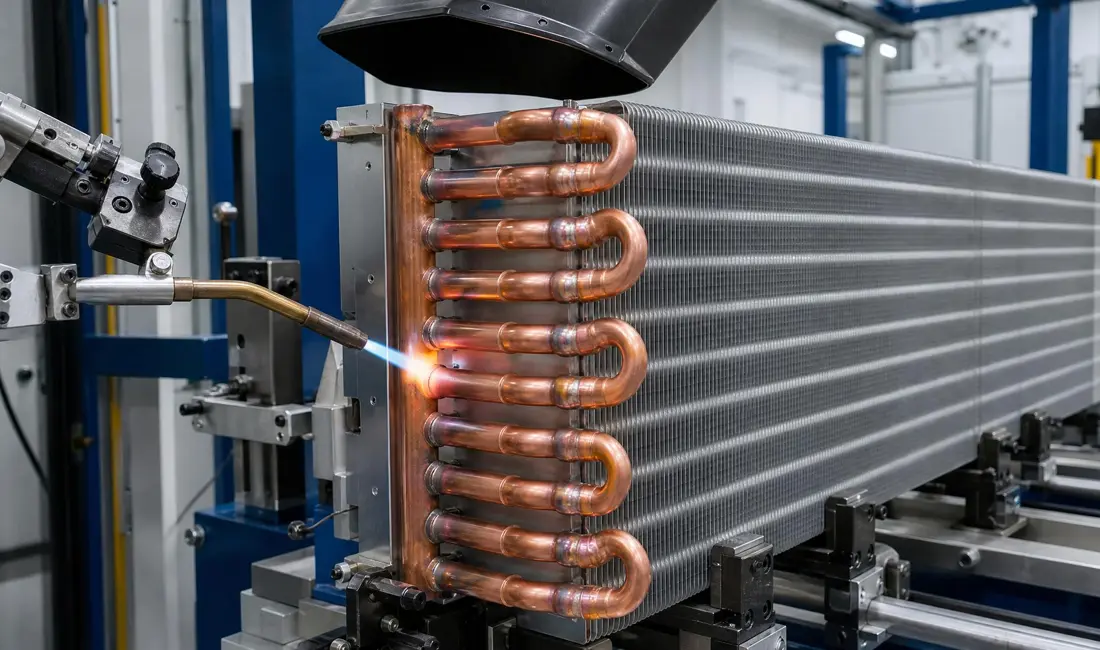
Brazing joins copper tubes into a leak-tight heat exchanger without melting the tubes. It is the standard way to seal coil joints, such as return bends, headers, and connections. A strong braze depends on three choices, such as the filler metal, the flux, and the joint design. Get these right, and the joint holds pressure for years. Get them wrong, and the coil leaks.
This guide explains each choice in plain terms for readers, such as coil makers, brazing operators, and process engineers. The goal is to help a plant braze copper coils that seal well and last.
What Is Brazing and Why It Matters for Copper Heat Exchangers
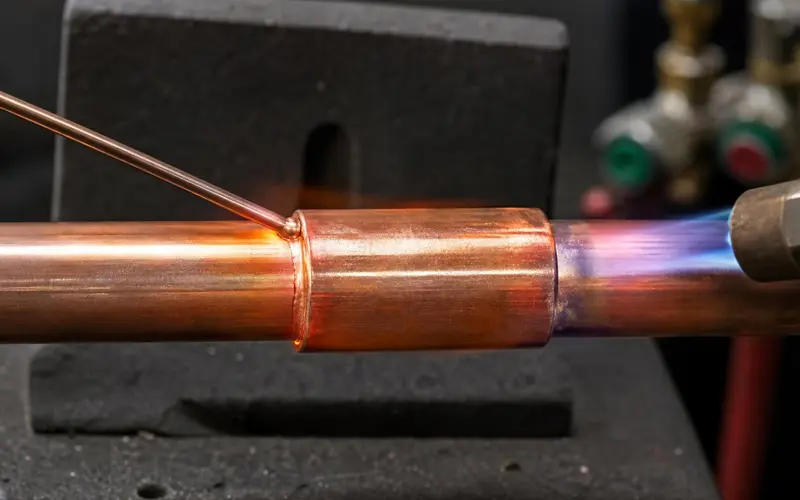
Brazing joins two metals with a melted filler metal. The filler flows above 450°C, or 840°F, but below the melting point of the base metal. This means the copper tube never melts. Instead, capillary action draws the liquid filler into the joint, where it sets into a solid seal. Brazing differs from welding, which melts the base metal, and from soldering, which works below 450°C. For copper heat exchangers, brazing hits a sweet spot. It makes a strong, leak-tight joint without harming thin tube walls. It also suits fast, repeatable work, which fits coil production well.
Filler Metal Selection for Brazing Copper
The filler metal is the alloy that melts and seals the joint. It decides how well the braze flows, bonds, and holds pressure. The right filler depends on the metals being joined and the cost. Two families cover most copper coil work, such as copper-phosphorus fillers and silver fillers. The parts below explain each one and how to choose.
Copper-Phosphorus (BCuP) Fillers
Copper-phosphorus fillers, marked BCuP, are the common choice for copper-to-copper joints. The phosphorus acts as its own flux on copper, so no extra flux is needed. This self-fluxing trait saves a step and lowers cost. Common grades include BCuP-2 and BCuP-5, which adds silver to flow better. These fillers melt in the range of about 640 to 820°C. But BCuP has one firm rule: never use it on steel or nickel-rich alloys, since it forms brittle joints there.
Silver (BAg) Fillers
Silver fillers, marked BAg, flow well and join a wide range of metals. They bond metals, such as copper, brass, steel, and stainless steel, with strength. They melt at a lower temperature than many other fillers, which protects thin parts. A grade such as BAg-1 holds about 45 percent silver and flows very smoothly. Silver fillers always need flux, except in a controlled furnace. Their main drawback is cost, since silver is a costly metal.
How to Choose the Right Filler
The choice comes down to the metals and the budget. For copper-to-copper joints, a self-fluxing BCuP filler is simple and low in cost. For copper joined to brass or bronze, BCuP works but flux is wise. For copper joined to steel or stainless steel, a silver filler with flux is the safe pick. A buyer should also weigh temperature, since a lower-melting filler protects thin walls. Matching the filler to the joint prevents most braze failures.
Flux Selection and Use
Flux is a paste or powder that keeps the joint clean during heating. Heat makes metal form oxides, and oxides stop the filler from flowing. Flux dissolves these oxides and shields the surface until the filler sets. But flux is not always needed. The parts below explain when to use it, which type to pick, and how to clean it off.
When Flux Is Needed (and When It Isn’t)
Flux is needed for most brazing, but not all. A copper-to-copper joint made with a BCuP filler needs no flux, since the phosphorus does the job. Every other common case needs flux. This includes joints, such as copper to steel, copper to stainless, and any silver-filler braze. Furnace brazing in a controlled atmosphere can also skip flux, since the gas keeps oxygen away. When in doubt, using flux is the safer choice.
Types of Flux
Brazing fluxes are matched to the filler and the metals. A white paste flux is common for silver brazing on copper and steel. Each flux has a working temperature range, so it must suit the filler’s melting point. A flux that is spent too early leaves the joint open to oxides. Operators should pick a flux rated for the filler in use. The supplier’s data sheet lists the right match.
Flux Removal After Brazing
Flux residue must come off after the braze. The leftover glass-like film is corrosive and can eat the copper over time. It can also hide a weak spot from inspection. Most flux comes off with hot water and a wire brush soon after the joint cools, while the residue is still soft. A clean joint is easier to inspect and lasts far longer. Skipping this step is a common cause of later coil failure.
Joint Design for Strong, Leak-Tight Brazes
Joint design decides whether the filler can do its job. Brazing relies on capillary action, which pulls liquid filler into a narrow gap. If the joint is designed well, the filler fills it fully and seals tight. Three design points matter most, such as the joint gap, the joint type, and the overlap length. The parts below cover each one.
The Right Joint Clearance
The gap between the two parts controls capillary action. A gap that is too wide will not pull the filler in, so the joint stays hollow. A gap that is too tight blocks the filler from entering. The best range for most copper brazing is about 0.025 to 0.125 mm, or 0.001 to 0.005 inch. A tight, even gap within this range gives the strongest, most leak-tight seal. Tube and fitting sizes should be matched to hold this clearance.
Lap vs Butt Joints
The joint type shapes its strength. A lap joint slides one tube inside another, so the two walls overlap. This overlap gives a large bond area and a strong, sealed joint. A butt joint sets two ends face to face, which gives a small bond area and a weaker result. For copper coil work, such as tube-to-fitting and tube-to-header joints, the lap design is standard. It suits capillary brazing and holds pressure well.
Joint Length and Overlap
The overlap length sets the size of the bond. A longer overlap gives more bond area, up to a useful limit. A common rule sets the overlap at about three times the wall thickness of the thinner part. Too little overlap makes a weak joint that may leak under pressure. Too much overlap wastes filler and adds little strength. Matching the overlap to the wall thickness gives a balanced, sound joint.
The Brazing Process Step by Step
Brazing works best as a set sequence. Each step sets up the next, so skipping one causes defects. The process runs in six main stages, such as cleaning, fluxing, assembly, heating, filler flow, and final cleaning. First, the operator cleans both parts to bare, bright metal. Next, flux is applied if the joint needs it. The parts are then assembled with the correct gap. The operator heats the joint evenly to brazing temperature, not the filler itself. When the parts are hot enough, the filler touches the joint and capillary action draws it in. Finally, the joint cools and the flux residue is washed off. Even heating and a clean surface are the keys to a sound braze.
Common Brazing Defects and How to Prevent Them
Most brazing faults come from a few clear causes, such as dirty parts, uneven heat, and a wrong gap. The table below lists the common defects, their causes, and how to stop them.
| Defect | Common cause | How to prevent it |
| Incomplete fill | Poor cleaning; gap too wide; too little heat | Clean to bright metal; set the correct gap; heat evenly |
| Voids or gaps | Trapped flux or gas; heating too fast | Heat gradually; let gas escape |
| Base metal erosion | Overheating; too long at heat | Control temperature; heat only to the flow point |
| Flux entrapment | Too much flux; poor joint fit | Apply a thin flux layer; keep an even gap |
| Weak or cracked joint | Wrong filler; cooling too fast | Match the filler; cool slowly |
| Oxidation / poor bond | No flux where needed; overheating | Use the right flux; watch the heat |
A short check of parts, gap, and heat prevents most of these faults. Logging the results also helps a team catch a slow drift before it turns into scrap.
Choosing Brazing Equipment for Heat Exchanger Production
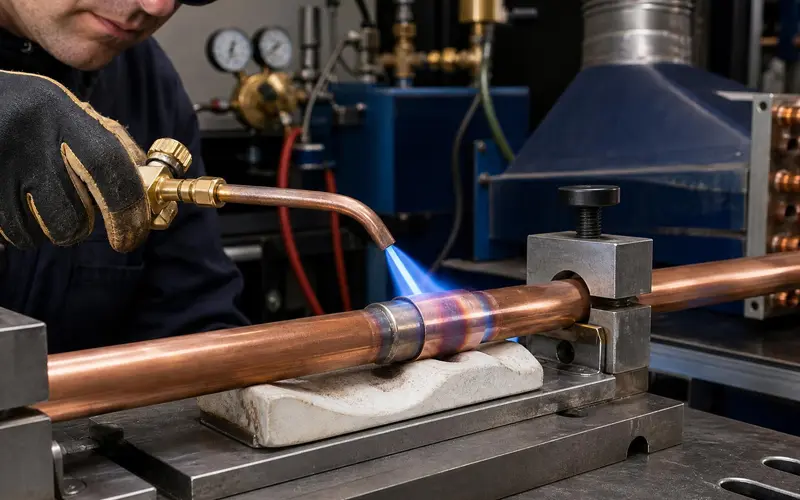
The brazing method should match the plant’s volume and parts. Hand torch brazing suits small runs, repairs, and varied work, since it is flexible and low in cost. Induction brazing heats the joint fast and evenly, which suits steady, high-volume runs. Furnace brazing in a controlled atmosphere can braze many joints at once, often without flux. Automated brazing raises speed and keeps each joint the same. Buyers who build coils in volume can review options for tube joining with a tube welding machine partner to match the setup to their coils.
Frequently Asked Questions
Do you need flux to braze copper to copper?
Usually not. A copper-to-copper joint made with a copper-phosphorus (BCuP) filler needs no flux. The phosphorus in the filler cleans the joint on its own. Flux is only needed if the filler is silver-based, or if one part is steel or stainless.
What is the best filler for brazing copper tubes?
It depends on the metals joined. For copper-to-copper, a self-fluxing BCuP filler is the common, low-cost choice. For copper joined to steel or stainless steel, a silver (BAg) filler with flux works best. The right filler matches both metals and the budget.
What joint gap is best for brazing copper?
A gap of about 0.025 to 0.125 mm, or 0.001 to 0.005 inch, works best. This narrow range lets capillary action pull the filler fully into the joint. A gap that is too wide or too tight leads to a weak or hollow braze. Tube and fitting sizes should be matched to hold this clearance.
Can brazed copper joints handle high pressure?
Yes, when they are made well. A clean joint with the right filler, gap, and overlap can hold high pressure for years. A lap joint with full filler penetration is strong and leak-tight. Poor cleaning or a wrong gap is what usually weakens a joint, not brazing itself.
Conclusion: Brazing Copper Coils That Seal and Last
A sound braze comes down to three linked choices, such as the filler, the flux, and the joint design. A matched filler flows and bonds well, while the right flux keeps the joint clean. A tight gap and a good lap joint let capillary action seal the tube fully. Careful heat and a final cleaning then lock in the result. A plant that controls these steps ships copper coils that hold pressure and resist leaks. A plant setting up or scaling a brazing line can compare tube-joining equipment on the tube welding machine page, or bring its coil specs to the contact page for tailored advice.
Want to Know More About Our Products?
View All Products Now